Why a “Strong Foundation” is the Difference Between Selection and Rejection
BMCC IAS – Best IAS Institute in Itanagar
In the cut-throat world of APPSCCE and UPSC CSE preparation, the difference between a ranker and a repeater is rarely just “hard work.” It is how you work. And it all starts with the foundation.
Many aspirants from Arunachal Pradesh make a critical mistake: they jump straight into advanced reference books (like Laxmikanth for Polity or Spectrum for History) without first building a rock-solid base. The result? They get confused by complex jargon, fail to grasp core concepts, and eventually lose motivation.
BMCC IAS, recognized as the Best IAS Institute in Arunachal Pradesh, has a proven 10-month Foundation Roadmap that starts with two non-negotiable pillars:
- NCERTs (Classes 6–12) for conceptual clarity.
- Arunachal Pradesh State Gazetteers & District Handbooks for state-specific relevance.
This blog details exactly how to use this dual-roadmap to build a GS foundation that can crack both APPSCCE and UPSC.
Pillar 1: The NCERT Backbone (Classes 6–12)
NCERTs are not just “easy books”; they are the source code of the civil services syllabus. They teach you the language of the exam.
Step 1: History & Culture (Classes 6–12)
- Classes 6–8 (Our Pasts I, II, III): Focus on the chronological flow. Don’t just memorize dates; understand why events happened.
- Arunachal Twist: When studying “Ancient India,” cross-reference with Monpa ancient trade routes and Tawang Monastery history (often in local glossaries).
- Class 11 (Themes in World History): Crucial for GS1 (World Geography & Modern History) and understanding global movements (French Revolution, Industrial Revolution) that influenced Indian nationalism.
- Class 12 (Modern India – Spectrum is a supplement, but NCERT first): Focus on the Congress sessions, Gandhian era, and Post-1947 integration.
- Key for APPSCCE: The integration of North-Eastern states (1947–1987) is a high-yield topic. NCERTs give the national context; you must add the NE context.
Step 2: Geography (Classes 6–12)
- Classes 6–8 (Fundamental of Physical Geography): Learn the basics of earth, rocks, atmosphere, and oceans. This is essential for CSAT and Prelims.
- Class 11 (Fundamentals of Physical Geography): The bible for Geography Optional. Clouds, cyclones, plate tectonics – master these.
- Arunachal Application: When studying “Drainage Systems,” don’t just read about the Ganga. Study the Brahmaputra’s tributaries (Siang, Dibang, Lohit) and their flash flood patterns.
- Class 12 (Human Geography & India: People & Economy): Focus on migration, industry, and agriculture.
- APPSCCE Focus: Horticulture in Arunachal (orange, ginger, turmeric) and hydro-power potential are direct links to this chapter.
Step 3: Polity (Class 11 – Indian Constitution at Work)
- This is the only NCERT you need for Polity basics before moving to Laxmikanth.
- Focus on Fundamental Rights, DPSP, and Emergency Provisions.
- Arunachal Context: How do Article 371 (I) and the Sixth Schedule apply to Hill District Councils in Arunachal? NCERT doesn’t cover this; that’s where the State Gazetteercomes in.
Step 4: Economy (Class 11 – Indian Economic Development)
- Understand GDP, Inflation, Budgeting, and Banking basics.
- APPSCCE Relevance: Micro-finance, Self-Help Groups (SHGs), and rural developmentschemes in the North-East are frequent questions.
Step 5: Environment & Science (Class 12 – Biology: Diversity in Living World)
- Ecosystems, Biodiversity, and Conservation are 100% from this chapter.
- Arunachal Goldmine: The state has 2 National Parks (Namdapha, Mouling) and 5 Wildlife Sanctuaries. Know the flora/fauna (Humpback Gibbon,Red Panda) from this NCERT base.
Pillar 2: The Arunachal State Gazetteer & District Handbook
This is the secret weapon that the Best IAS Institute for Arunachal Pradesh PSC uses to give its students an edge.
What are Gazetteers? They are official government documents that detail the geography, history, economy, and administration of a specific state or district.
Why They Matter for APPSCCE:
The APPSCCE syllabus explicitly asks for state-specific knowledge:
- “Discuss the hydro-power potential of Arunachal Pradesh.”
- “Analyze the tribal demographics of Lower Subansiri.”
- “What are the challenges of road connectivity in Tawang?”
NCERTs cannot answer these. Only Gazetteers can.
How to Use Them (The BMCC IAS Method):
- Download the “Arunachal Pradesh Gazetteer” (Vol. I & II) from the State Archives or BMCC IAS LMS.
- Focus on These Sections:
- Geography: River systems, climate zones, soil types.
- Economy: Major crops, mining, hydro-projects (Dibang, Lower Siang).
- Culture: Major festivals (Yomgo, Solung, Mopin), tribal customs.
- Administration: Structure of DDC (District Development Councils), MC (Municipal Councils).
- Cross-Reference with Current Affairs:
- If a new hydro-project is in the news, check the Gazetteer for its historical background and environmental impact.
- If a tribal protest is reported, use the Gazetteer to understand the social structure of that tribe.
Example: Answering a GS3 Question
Question: “How can hydro-power development in Arunachal Pradesh be made more sustainable?”
- NCERT Base: Understanding of environmental clearance, ecosystem disruption.
- Gazetteer Base: Specific data on river flow in Siang, local tribal concerns, past project failures.
- Result: A high-scoring, nuanced answer that only BMCC IAS students can write.
The 6-Month Foundation Plan (BMCC IAS Schedule)
| Month | Focus Area | NCERTs | State Gazetteer/Local Source | Output |
|---|---|---|---|---|
| 1 | History | Class 6–12 (Ancient/Medieval) | Gazetteer: “History of NE India” | Timeline notes + 10 MCQs/day |
| 2 | Geography | Class 6–12 (Physical/Indian) | Gazetteer: “Physiography of AP” | Map drills + Soil/Climate notes |
| 3 | Polity | Class 11 (Const. at Work) | Gazetteer: “Panchayati Raj in AP” | Flowcharts + Article summary |
| 4 | Economy | Class 11 (Econ. Dev.) | Gazetteer: “Economy of AP” (Agri/Hydro) | Terminology glossary |
| 5 | Environment | Class 12 (Biology) | Gazetteer: “National Parks & SW” | Species list + Conservation acts |
| 6 | Integration | Revision | Current Affairs (Last 6 months) | 1 Full Mock Test + Answer Writing |
Why BMCC IAS is the Best IAS Institute in Itanagar for Foundation
- Structured Roadmap: We don’t just say “read NCERT.” We give you a chapter-by-chapter guide with state-specific annotations.
- State Gazetteer Access: BMCC IAS provides digitized, searchable PDFs of the Arunachal Gazetteers, plus summary notes prepared by our faculty.
- Hybrid Mentorship: Weekly doubt-clearing sessions at Itanagar and Naharlaguncentres to discuss complex topics like “Federalism in the North-East.”
- Answer Writing from Day 1: Even in the foundation phase, you write short answersconnecting NCERT theory to Arunachal reality.
Final Thought: Build Strong, Rise Fast
The APPSCCE exam is not about memorizing facts; it’s about understanding context. And the only way to get that context is through a strong foundation built on NCERTs and State Gazetteers.
If you want to avoid the “lost” feeling and start your journey with clarity and confidence, join the Foundation Batch 2026 at BMCC IAS – the Best IAS Institute in Arunachal Pradesh.
Enrol Today:
📞 +91‑9366591839 | 🌐 https://bmccias.graphy.com or https://www.bmccias.com
BMCC IAS – Best IAS Institute in Itanagar
You may also like
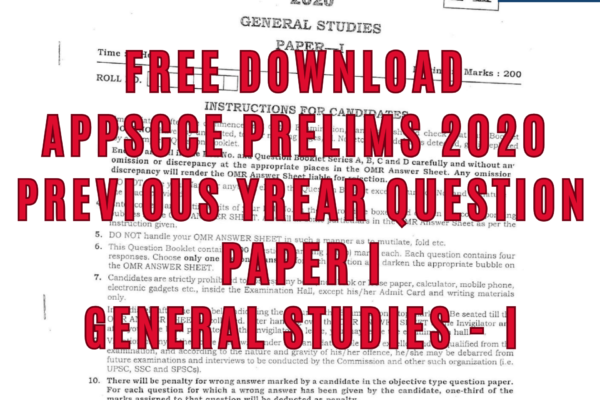
FREE DOWNLOAD: APPSCCE Prelims PYQ 2020 GS Paper 1!