India’s E-Waste Crisis:
GS-Paper 3 – Environment & Ecology
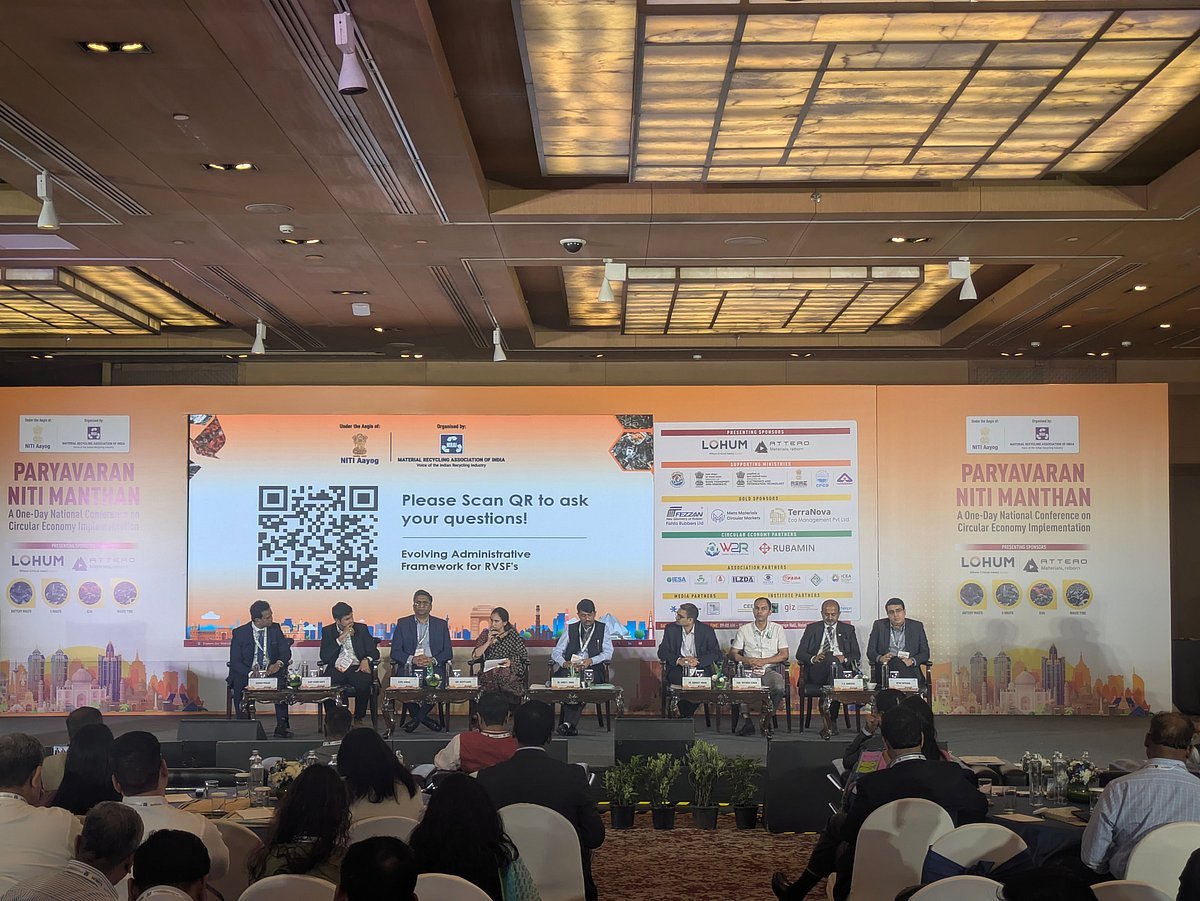
India generated 6.2 million tonnes of e-waste in FY24, valued at ₹51,000 crore in recoverable materials, yet only 10% enters formal recycling channels. The Paryavaran NITI Manthan conference in New Delhi, organized by NITI Aayog and Material Recycling Association of India (MRAI), exposed structural flaws in Extended Producer Responsibility (EPR), informal sector dominance, and policy silos. With projections doubling to 14 million tonnes by 2030.
Context
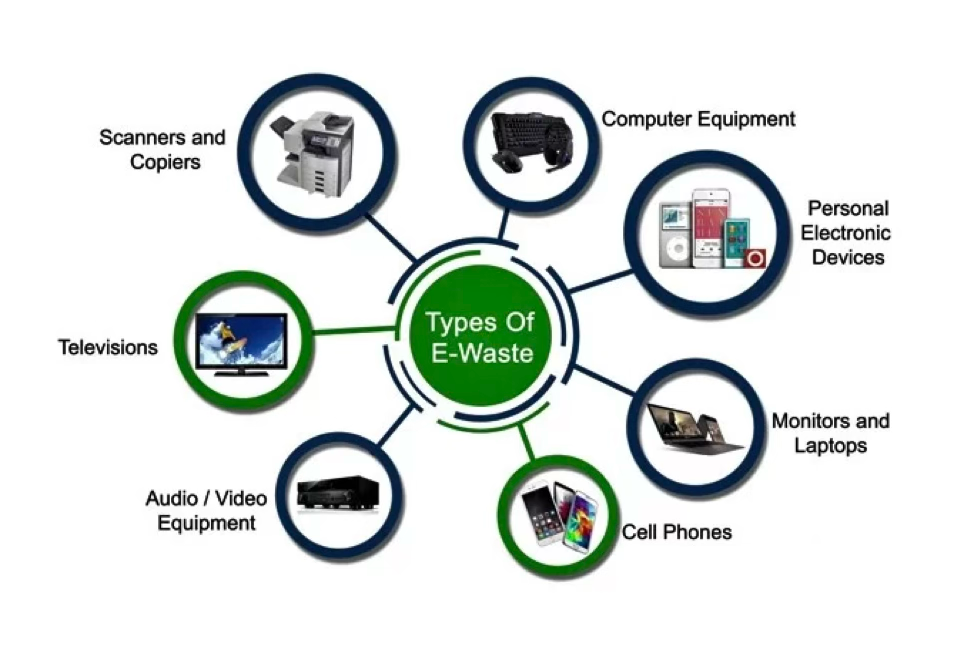
- E-waste—discarded electronics like mobiles, TVs, batteries—comprises 33% metals (gold, copper, rare earths).
- FY24’s 6.2 MT surge reflects 72% growth since FY20, driven by digital boom (1 billion smartphones).
- Formal capacity: ~2 MT; informal handles 90%, using hazardous open burning/acid leaching.
- Lithium-ion batteries echo this—29 GWh demand (2025) to 248 GWh (2035), critical minerals untapped.
E-waste Definition from Indian Government Perspective
E-Waste is defined under the E-Waste (Management) Rules, 2022 notified by the Ministry of Environment, Forest and Climate Change (MoEFCC) under the Environment (Protection) Act, 1986.
Official Definition (Schedule I, E-Waste (Management) Rules, 2022):
“Electrical and electronic equipment, whole or in part, which has been discarded or intended to be discarded or required to be discarded by the producer, including parts or accessories, but excluding batteries.”
Key Components of the Definition:
- Scope: Covers 100+ categories across 21 product groups (IT/ telecom, consumer electronics, lighting, medical, etc.)
- Exclusions: Functional equipment for direct reuse, intact components for reuse, batteries (covered under Battery Waste Management Rules, 2022)
- Legal Status: Applies to both end-of-life products and manufacturing rejects
CPCB Clarification: E-waste includes all components, sub-assemblies, and fractions from electrical/electronic equipment at end-of-life, excluding items meant for aesthetic refurbishment or functional reuse without repair.
E-Waste – Concept
E-waste recycling extracts valuables via dismantling, shredding, smelting, hydrometallurgy. EPR mandates producers fund collection/recycling via Producer Responsibility Organizations (PROs).
Circular economy views waste as resource: recover 95% metals, cut mining imports (India imports 95% copper).
- Informal sector: Low-tech, pollutes via Pb/Cd/Hg leaching into soil/water.
- Formal: Tech-driven (electrostatic separation), compliant but capacity-constrained.
- Key gap: Narrow EPR focus (Cu/Al/Au) ignores low-value chemistries (LFP batteries).
- Traceability via CPCB portal lags; GST-EPR unlink enables fake claims.
Analysis
Positive Impacts: Formal recycling (10-43% recent rise) recovers ₹9,350 Cr annually, creates 5 lakh jobs, cuts GHG by 80% vs. virgin mining. Reduces import dependence (critical minerals for EVs/batteries); Attero/Recykal scale via tech (AI sorting). Conference signals shift to “effective recovery,” common EPR portal pilots (plastics first).
Negative Impacts: 90% informal processing releases 1.5 lakh tonnes toxics/year, contaminating groundwater (Seelampur hotspots). Health: Worker cancers/respiratory issues; child labor prevalent. Environment: Landfills leach into 60% e-waste cities; biodiversity loss.
International Conventions and Agreements
- Basel Convention (1989, India 1992) bans hazardous waste transboundary movement; regulates e-waste as Annex VIII.
- Bamako Convention (Africa, influential) prohibits imports.
- Stockholm Convention targets POPs in e-waste (PBDEs).
- WEEE Directive (EU) mandates 85% collection; inspires global EPR.
- UN Minamata (Hg) curbs e-waste mercury. G20 Circular Economy Roadmap (2019) pushes India’s alignment; UNEP’s Step Initiative aids tech transfer.
- Bilateral Ties: Indo-EU clean tech pact for recycling R&D.
Indian Laws and Policies
- E-Waste (Management) Rules, 2022 (effective Apr 2023) expands to 100+ items, EPR recycling targets (60% by 2024-25, 80% 2029-30), PRO registration on CPCB portal. Bans informal; display recycling fee.
- Battery Waste Management Rules, 2022 EPR for Li-ion (thresholds: 5 kWh/yr).
- Hazardous Wastes Rules, 2016 prior authorization. Swachh Bharat mandates segregation; Economic Survey 2025-26 flags ₹51k Cr value.
- NGT orders inventorization; CPCB monitors 65 cities (60% e-waste).
Way Forward
Integrate informal sector via training/certification (MRAI model), ticket-based grievance redressal. Unified EPR portal across wastes; GST linkage for traceability. Expand scope to all minerals, differentiated pricing for batteries. Invest ₹50k Cr in 50+ formal plants (PLIs); public awareness via producer take-back (1M collection points). Dedicated nodal authority under NITI/CPCB for continuity. R&D: Hydrometallurgy for low-value chemistries; data disclosure mandates. State-level facilities (cover 17 gaps); circular hubs in 10 states (70% e-waste). Monitor via AI/blockchain; align with net-zero 2070.
India’s e-waste holds circular promise, but execution gaps demand urgent reform for sustainable recovery.